<!DOCTYPE example
[
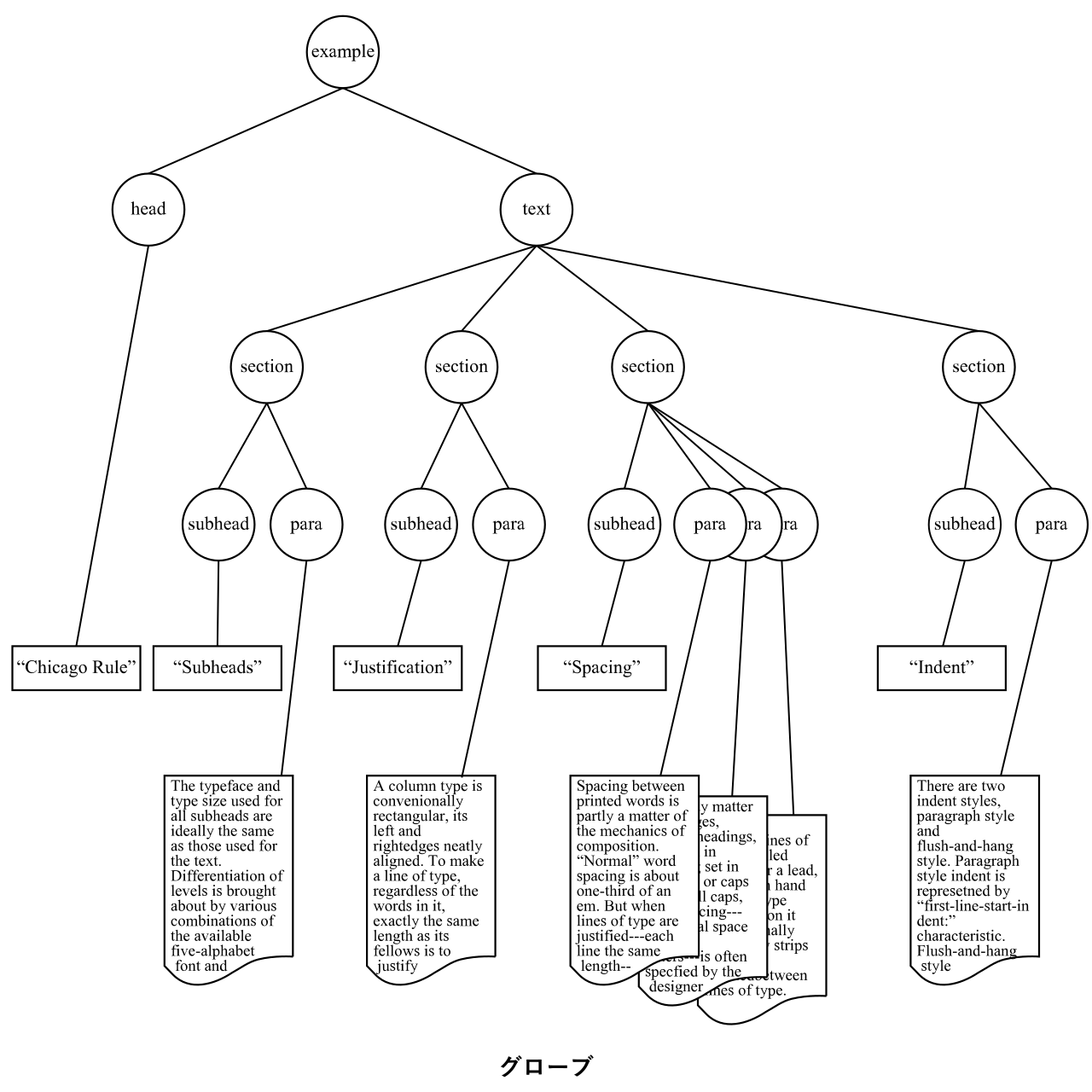
<!ELEMENT example - - (head,text)>
<!ELEMENT head - - (#PCDATA)>
<!ELEMENT text - - (section+)>
<!ELEMENT section - - (subhead,para+)>
<!ELEMENT subhead - - (#PCDATA)>
<!ELEMENT para - - (#PCDATA)>
]
>

<example>
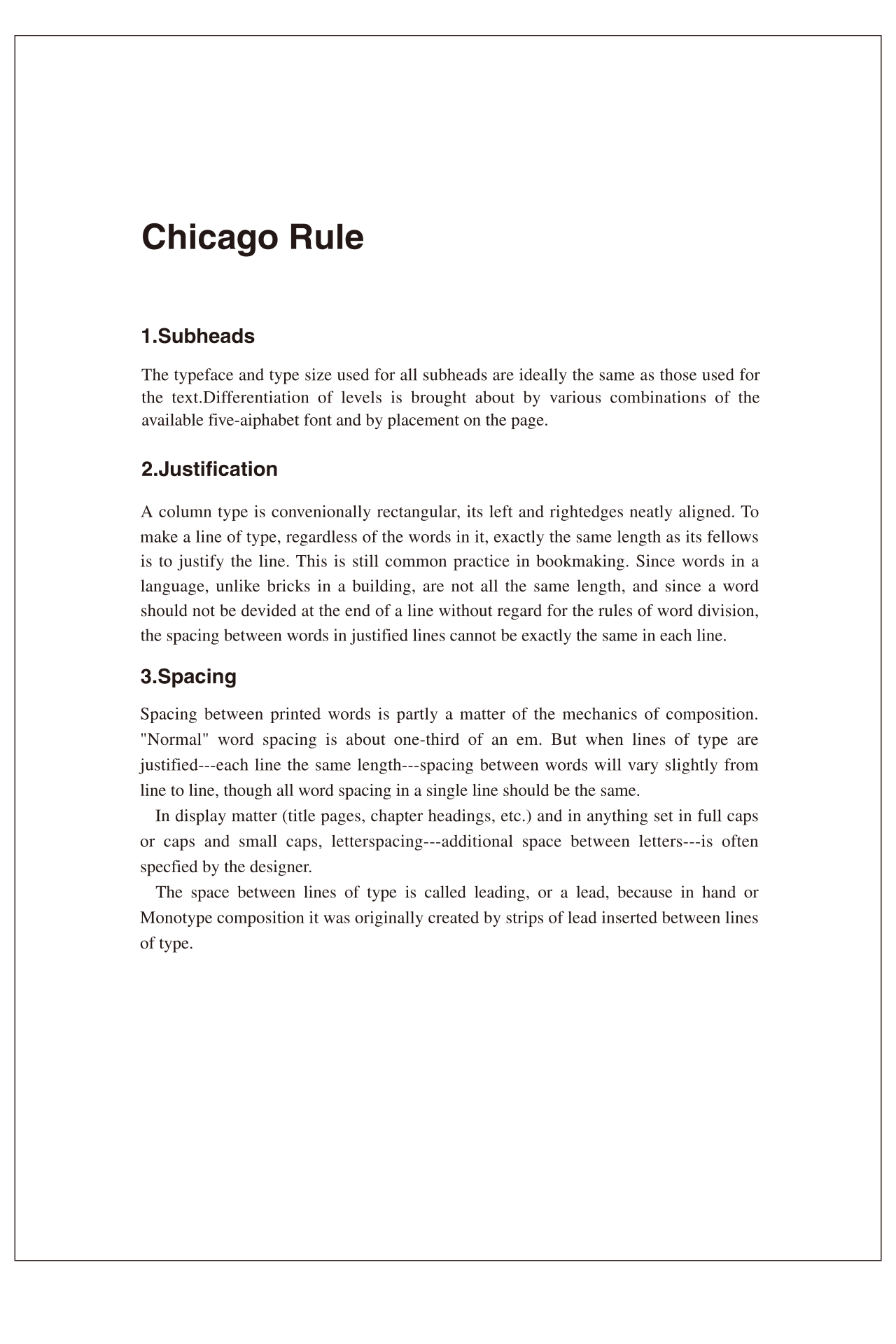
 <head>Chicago Rule</head>

 <text>
  <section>
   <subhead>Subheads</subhead>
   <para>The typeface and type size used for all subheads are ideally the
same as those used for the text. Differentiation of levels is brought about
by various combinations of the available five-alphabet font and by
placement on the page.</para>
  </section>

  <section>
   <subhead>Justification</subhead>
   <para>A column type is convenionally rectangular, its left and
rightedges neatly aligned. To make a line of type, regardless of the words
in it, exactly the same length as its fellows is to justify the line. This
is still common practice in bookmaking. Since words in a language, unlike
bricks in a building, are not all the same length, and since a word should
not be devided at the end of a line without regard for the rules of word
division, the spacing between words in justified lines cannot be exactly
the same in each line.</para>
  </section>

  <section>
   <subhead>Spacing</subhead>
   <para>Spacing between printed words is partly a matter of the mechanics
of composition. “Normal” word spacing is about one-third of an em. But
when lines of type are justified---each line the same length---spacing
between words will vary slightly from line to line, though all word spacing
in a single line should be the same.</para>
   <para>In display matter (title pages, chapter headings, etc.) and in
anything set in full caps or caps and small caps, letterspacing---
additional space between letters---is often specfied by the
designer.</para>
   <para>The space between lines of type is called leading, or a lead,
because in hand or Monotype composition it was originally created by strips
of lead insertedbetween lines of type.</para>
  </section>

  <section>
   <subhead>Indent</subhead>
   <para>There are two indent styles, paragraph style and flush-and-hang
style. Paragraph style indent is represetned by “first-line-start-indent:”
characteristic. Flush-and-hang style indent is represented by “first-linestart-
indent:” and“start-indent:” characteristics.</para>
  </section>
 </text>
</example>